Is AI Filmmaking Ready for Agency Work? Comparing Speed, Control and Consistency
A year or two ago, AI video was mostly a party trick. Short clips, odd hands, characters that melted halfway through a shot. Agencies watched with interest and kept their real projects on traditional production.
That has changed. The models are better, the tools around them are more organised, and clients are now asking whether AI can lower costs and shorten timelines. So the question is fair: is it actually ready for agency work, or is it still best for experiments? The honest answer is that it depends on three things, speed, control and consistency, and each one deserves a closer look.

Speed: the clear win, with a catch
Speed is where AI filmmaking is easiest to defend. A concept that once needed a location, a crew and a day of shooting can now be drafted in an afternoon. For pitches, mood films and early concept work, that is a real change. Teams can show a client a moving version of an idea before spending serious money on it.
Social content benefits too. Agencies that produce a steady flow of short videos for several brands can turn around variations much faster than before.
The catch is that raw generation speed isn’t the same as delivery speed. A clip may take minutes to generate, but a finished film still needs a script, matched shots, sound, edits, subtitles and several formats. If those steps happen in separate tools, the time saved at the start leaks away in the middle. Plenty of teams find that the first draft is fast and the last ten percent is slow.
So when you hear that AI cuts production time, ask which part of the process is being measured. Generation, yes. The whole project, only if the workflow around it is sound.
Control: better than before, still uneven
Control is what clients care about most, and it is where early AI video frustrated people. If you can’t direct the camera, change the lighting or fix one small detail without redoing the whole shot, it is hard to promise a client a specific result.
Things have improved. Many models now accept reference images, offer some camera movement options and respond better to detailed direction. You can usually steer a shot toward what you want, even if you can’t dictate every pixel.
Still, control varies a lot between models. One might handle camera moves well but struggle with faces. Another might do beautiful close-ups and fall apart on fast action. That is why agencies tend to do better when they can choose a model per shot instead of committing to one engine for a whole project.
There is also a softer kind of control, which is process control. Who is allowed to generate? Who approves a shot? How are credits tracked? On client work, these questions matter as much as the picture. A team that can’t answer them will struggle however good the footage looks.
Consistency: the make-or-break issue
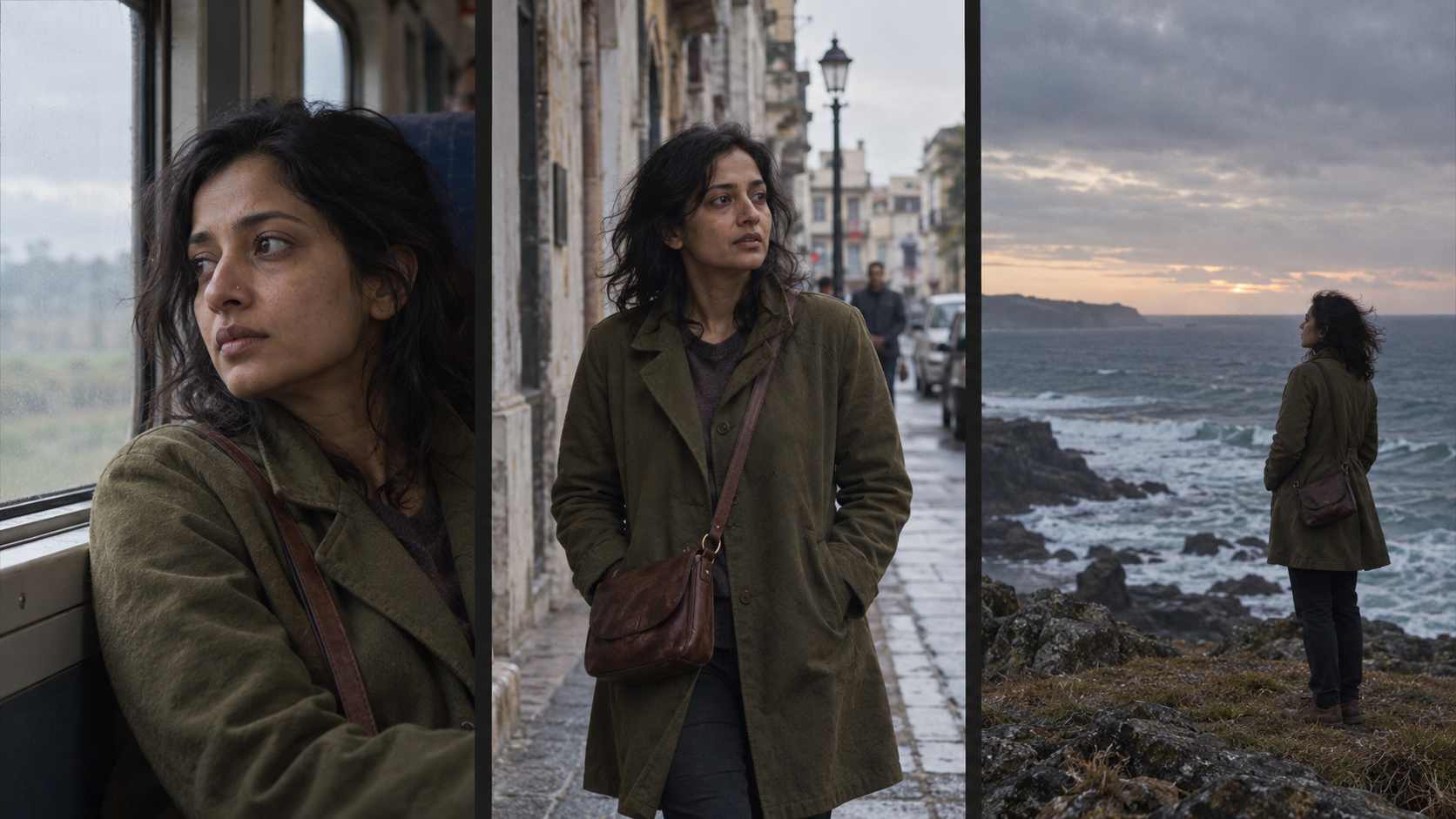
If I had to pick the single factor that decides whether AI video is ready for client work, it would be consistency. A brand film has recurring elements: a spokesperson, a product, a colour palette, a logo. If any of those change from shot to shot, the film looks careless.
Early tools were poor at this. Faces drifted, outfits changed and products looked different in each clip. Current tools handle it better, especially when you feed them solid references, but it still takes care. A character who looks right in a close-up may look slightly different in a wide shot.
Consistency also means brand consistency across projects and team members. Colours, typefaces and logo placement have to hold up whether the work is done by one editor or five. When references are scattered across folders and chat threads, this slips quickly.
For that reason, many agencies now treat reference management as a core part of production: store approved character images, product shots and brand assets in one place, and make sure everyone pulls from it.
Where the readiness really sits
Putting the three together, here is a fair summary.
For concept work, pitches, social variations and short ads with simple stories, AI filmmaking is ready now. The speed gain is large, and the consistency demands are manageable.
For longer narrative pieces, heavily branded campaigns with strict guidelines, or anything with complex multi-character scenes, it is workable but needs more planning and more human editing. It isn’t a push-button replacement for a production team.
For work that depends on very specific real-world footage, such as a particular product being used in a particular place, traditional production is still the safer choice, or a hybrid of the two.
In other words, the technology is ready for a lot of agency work, but the process around it decides whether the results are good.
What agencies should look for
If you’re evaluating ai filmmaking software for agencies, a short checklist helps.
● Several video models in one place, so you can choose per shot.
● Character and product consistency tools, ideally with a reference library.
● Brand controls that keep colours, type and logos fixed.
● Team permissions and credit limits, so work and spending stay organised.
● Reusable workflows, so repeated steps don’t have to be rebuilt each time.
● Easy export to different aspect ratios, with subtitles and translations.
If a product misses several of these, expect manual workarounds as soon as more than one person is involved.
One example of a connected setup
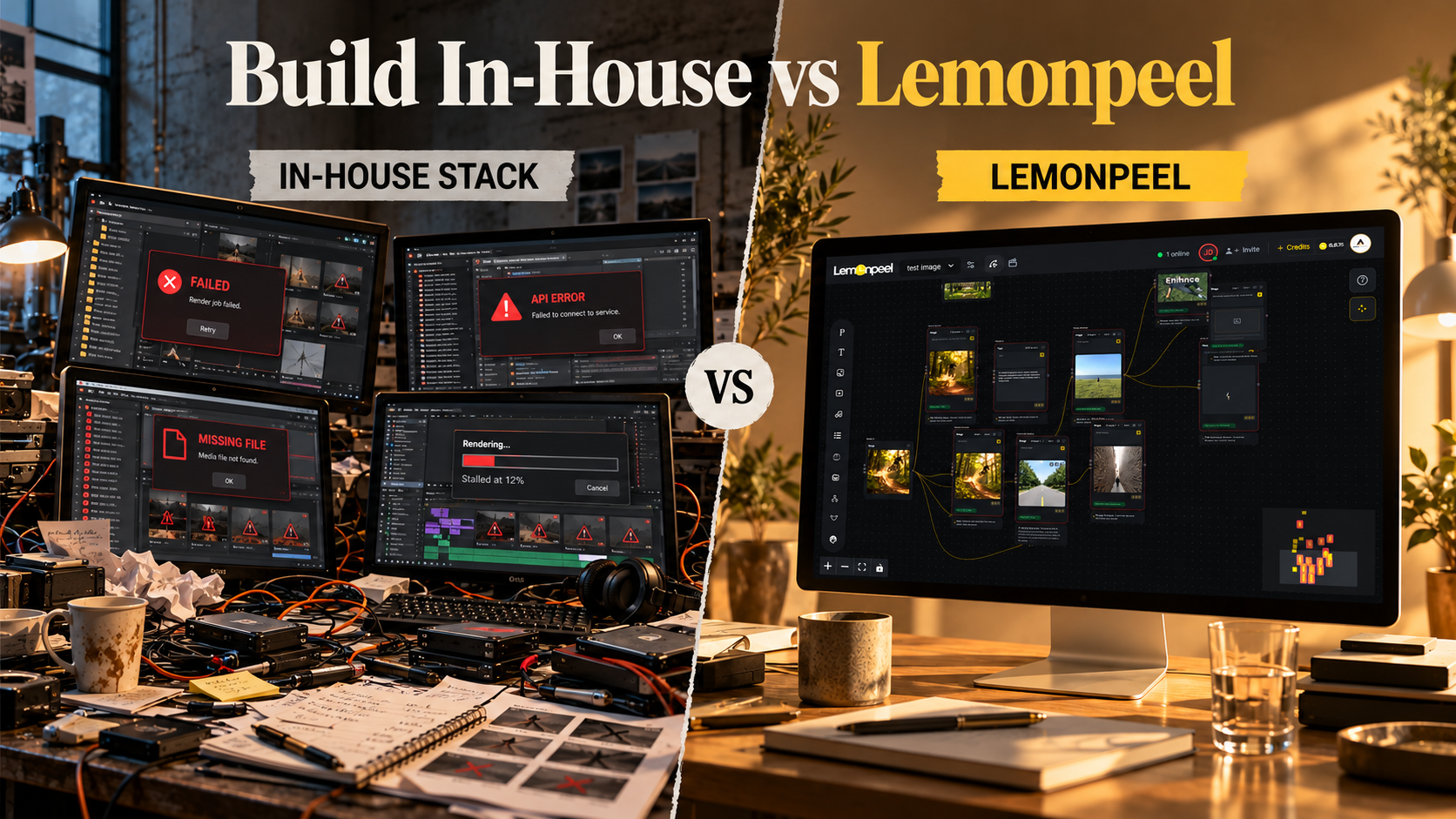
LemonPeel is one platform built around this idea. It puts text, image, video and sound on a single canvas and offers access to models including Seedance, Kling and Wan. Its feature list maps onto the checklist: Character Consistency, an Asset Reference System, Brand Kit, Team Controls, Flows for reusing steps, Reframe & Resize, and Translate & Lipsync and Subtitles for over 100 languages. It also includes Camera Control for shot direction and a Lemonpeel Agent, currently in beta, that takes a brief and returns a cut.
As with any tool, try it on a real project you’ve finished before, not a sample, and see how much of your usual workaround work disappears.
A sensible way to start
Don’t hand your biggest client’s campaign to a brand-new workflow. Start with a lower-risk job, such as an internal video, a social series or a pitch film. Track how long it takes from brief to delivery, how many revisions are needed, and whether a colleague could repeat the process without help. Those three numbers will tell you more about readiness than any demo.
The short answer is that AI filmmaking is ready for agency work where speed matters and the stakes for perfection are moderate, and it is getting closer for the rest. Agencies that choose their ai filmmaking software with these three factors in mind, and build a clear process around it, tend to get the most out of it.
FAQs
Is AI filmmaking good enough for professional client work?
For many tasks, yes, including pitches, social videos and short ads. Longer or highly branded projects can work too, but they need stronger planning, reference control and human editing.
What is the biggest challenge when using AI video for agencies?
Consistency. Keeping characters, products and brand elements the same across shots and team members takes careful reference management and, ideally, software with built-in consistency tools.
Does AI filmmaking replace traditional production?
Not entirely. It reduces cost and time for many projects, but work that needs specific real-world footage or complex staging often still benefits from traditional production or a mix of both.